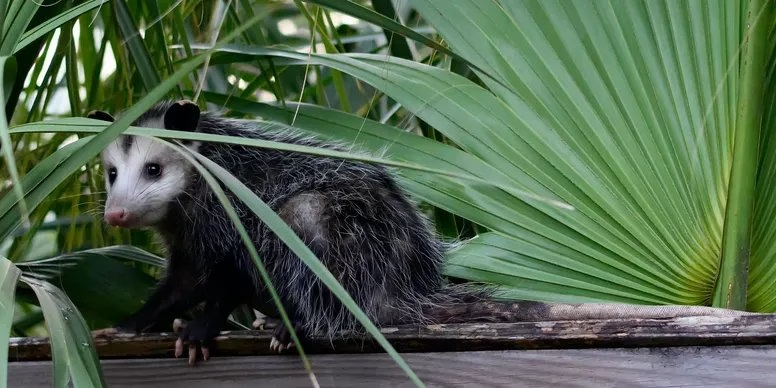
Opossum
& Skunk
Opossums and skunks aren’t aggressive — but they do significant damage when they take up residence under your deck, in a crawlspace, or in a garage. Skunks add the obvious problem of defensive spray. We do humane removal and exclude the den site so the next one doesn’t move in.
The real risk of doing nothing.
Wildlife in your home is not a problem that resolves on its own. Every day they’re inside, the damage compounds — and the longer you wait, the more expensive the eventual fix becomes. Here’s specifically what’s at stake when opossum & skunk get inside.
Skunk spray is hard to remove
Skunk thiols saturate insulation, wood, and HVAC ductwork — meaning a sprayed crawlspace or garage smells for weeks or months without proper deodorization. DIY remedies (tomato juice, vinegar) don’t work.
Opossum ‘playing dead’ is misleading
An opossum that appears dead in your garage may be in a defensive coma — and will wake up in hours. They can be relocated safely, but moving them yourself is a bad idea.
Foundation undermining
Both species dig dens under decks, sheds, and concrete slabs. Over time, this can undermine foundations, crack slabs, and create entry points for water and other wildlife.
Pet conflicts
Skunks spray pets. Opossums hiss and bare teeth. Neither typically attacks, but pet-skunk encounters are common — and the cleanup is brutal.
Disease risk
Skunks are a rabies vector in our region. Opossums carry tularemia, leptospirosis, and various parasites. While direct human disease transmission is rare, droppings and den sites do require sanitization.
Repeated occupancy
Once a den site is established, other animals follow. Skunks, opossums, and groundhogs frequently reuse the same dens. Sealing after removal is essential.
Signs you have opossum & skunk.
If any of these match what you’re hearing or seeing, call us for a free inspection. We’ll confirm the species and rule out anything else before we ever quote work.
- Strong skunk odor in the yard, garage, or near the foundation
- Dug-out areas under decks, sheds, porches, or AC units
- Tracks in soft soil — opossum tracks show 5 toes; skunk tracks show 5 toes with visible claw marks
- Garbage bags torn open at night (more likely opossum than skunk)
- Cone-shaped holes in the lawn (skunks digging for grubs)
- Pet food disappearing from the porch overnight
How we actually fix this.
A real solution requires more than catching the animal — you have to seal the access points, repair the damage, and prevent re-entry. Here’s the process we follow for every opossum & skunk job.
Inspection — identify the den site
We locate the active den (under deck, shed, crawlspace) and confirm the species. Often we find evidence of both opossums and skunks using the same site at different times.
Confirm whether young are present
Both species den in spring with young. We assess before any removal — sealing a mother out from her offspring is both inhumane and creates a worse smell problem for you. If young are present, we time the work carefully.
Humane live trapping or eviction
For active dens, we use one-way exit doors so animals leave at night to forage and cannot return. For skunks specifically, we use covered traps to minimize spray risk — handling is done at dawn before light triggers spray response.
Den-site exclusion
We seal the den entry with heavy-duty hardware cloth dug 12+ inches below grade, plus an outward-angled L-shape to prevent re-digging. Materials are color-matched and won’t undermine deck or shed footings.
Sanitization & deodorization
Where skunk spray is present, we apply enzymatic deodorizers (not masking sprays). Den-site soil and any contaminated insulation is treated or removed.
Final check + prevention guidance
We make sure the seal holds and document document what attracted the den (gap under deck, dirt accessibility, food source) and how to prevent re-establishment.
Every opossum & skunk job includes:
No upcharges, no surprise fees. Flat-rate quote up front and full insurance coverage on every exclusion.
- Free inspection & species ID
- Assessment for young in den
- One-way door eviction (preferred)
- Covered live trap (when needed for skunks)
- Buried L-shaped hardware cloth exclusion
- Color-matched deck/shed finishing
- Enzymatic deodorization for skunk spray
- Den-site soil & contamination treatment
- Photo documentation throughout
- Habitat modification recommendations
- backed by our full insurance
- Catch-and-release (no killing)
Opossum & Skunk — your questions, answered.
Is it a skunk if I smell skunk?
Maybe. A skunk could be living under your deck — or a skunk could have passed through and sprayed near it. We’ll check during inspection. If the smell persists for days in the same intensity, that’s almost always an active den, not a passerby.
Should I trap it myself?
We strongly recommend you don’t, especially with skunks. Even experienced trappers get sprayed regularly. And both species can carry rabies — handling them without PPE is a serious risk. The cost of professional removal is almost always less than the cost of skunked clothes, sprayed cars, or a rabies post-exposure protocol.
How much does this cost?
It varies — every job is different. The price depends on whether young are present, how complex the den site is, and whether deodorization is needed. Instead of publishing a guess, we do a free inspection and give you a flat-rate quote up front, with no surprises.
Aren’t opossums actually beneficial?
They are — they eat ticks, slugs, and a lot of pests. We share that perspective. We relocate them rather than killing them. But an opossum living in your crawlspace is still a problem — droppings accumulate, structural damage compounds, and other wildlife follows. The right answer is relocation and exclusion, not extermination.
How do I keep them from coming back?
Three things matter most: seal under all decks, sheds, and porches with buried hardware cloth (we do this as part of the exclusion); secure trash and pet food at night; and address grub populations if skunks have been digging your lawn. We provide specific guidance for your property.
Can you remove a dead one?
Yes. Dead-animal removal is one of our most-requested services — including when an opossum dies in a wall or crawlspace from another cause. We locate, remove, sanitize, and deodorize. Same-day service usually available.
Ready to solve this?
Free inspection, flat-rate quote, and work done right the first time. Call us or schedule online — same-day available.